


Retail surveillance has traditionally depended on CCTV cameras that simply record events. These systems act as passive observers — they capture footage but do not understand what is happening. Security personnel must manually review recordings after an incident occurs, which means theft or intrusion is usually discovered too late.
Modern retail environments, however, require preventive security rather than reactive investigation. AI-powered intrusion detection transforms surveillance cameras into intelligent monitoring systems. Instead of only recording video, the system analyzes behavior patterns and identifies suspicious activity in real time.
AI surveillance does not replace cameras — it changes what cameras do. The camera becomes an active security sensor capable of detecting risks before losses occur.
Traditional CCTV Surveillance: Passive Monitoring
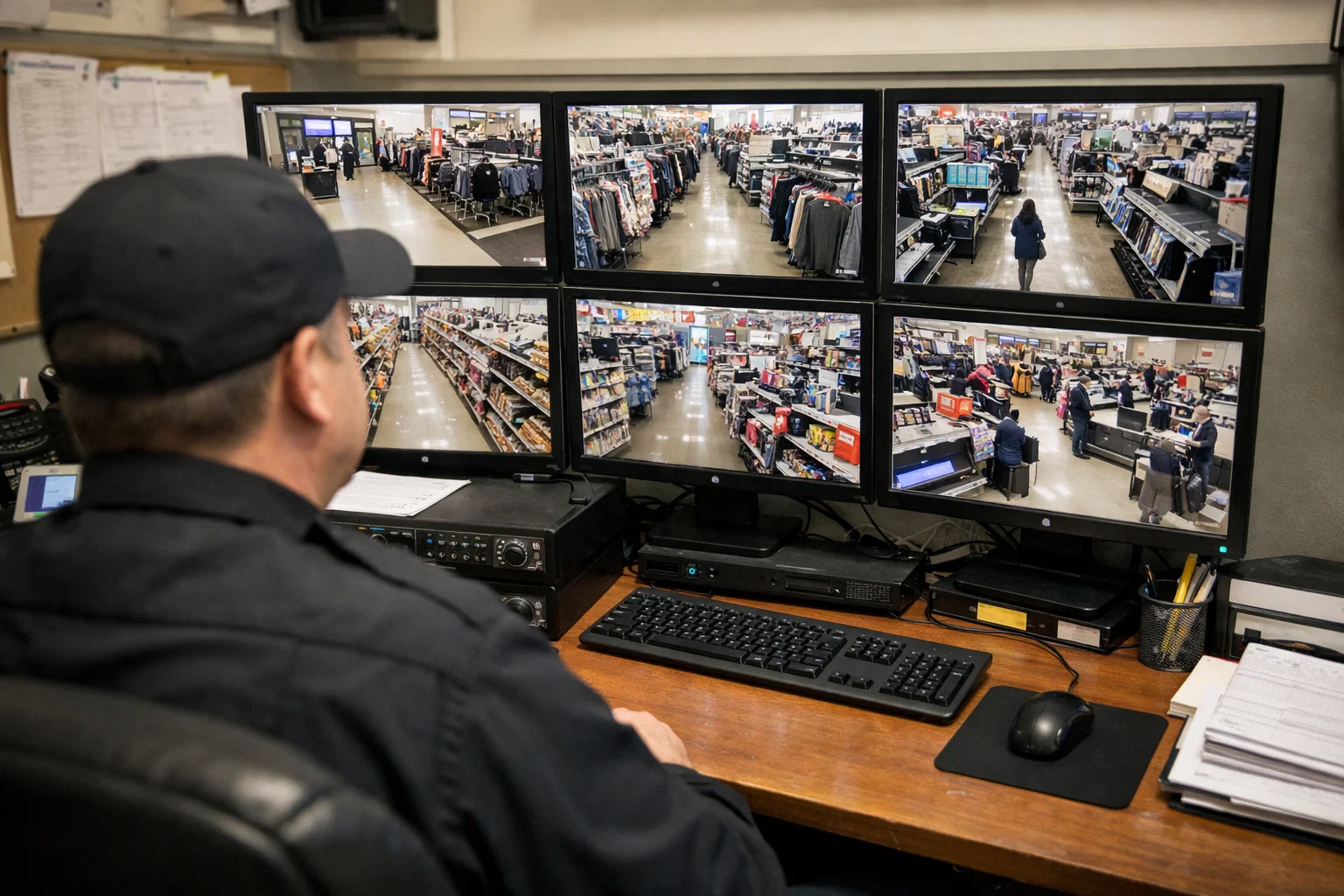
Conventional CCTV systems operate on a simple principle: continuous recording. Cameras capture video streams and store them in a DVR/NVR system. When a theft or break-in happens, staff must search through hours of footage to find the incident.
This approach introduces multiple operational limitations.
First, monitoring depends on human attention. A security guard cannot continuously watch dozens of screens without fatigue. Important events are often missed.
Second, detection happens after the event. CCTV provides evidence but rarely prevents incidents.
Third, retail stores generate massive video data that is rarely analyzed unless an incident occurs.
In short, traditional surveillance is an investigation tool, not a prevention system.
AI Intrusion Detection: Intelligent Monitoring
AI intrusion detection systems use computer vision algorithms inside the camera or edge device to analyze live video streams. The system identifies movement patterns, object behavior, and human activity instead of only recording pixels.
When suspicious activity is detected, the system generates an immediate alert.
Examples in retail include:
- Unauthorized entry after closing hours
- Loitering near high-value shelves
- Suspicious repeated shelf interaction
- Restricted-area access
- Cash counter tampering
The system continuously evaluates behavior rather than waiting for a human operator. This converts surveillance from video recording into real-time risk detection.
Real-Time Prevention vs Post-Event Evidence
One of the biggest differences between AI surveillance and CCTV is response timing.
Traditional CCTV works after an incident.
AI security works during the incident.
If a person enters a closed store at night, a CCTV camera records it. Staff may only discover the event the next morning.
An AI camera detects the intrusion instantly and triggers:
- mobile notification
- siren
- security call
- automatic lighting activation
This immediate response significantly reduces theft and vandalism losses.
Behavior Analysis Instead of Motion Detection
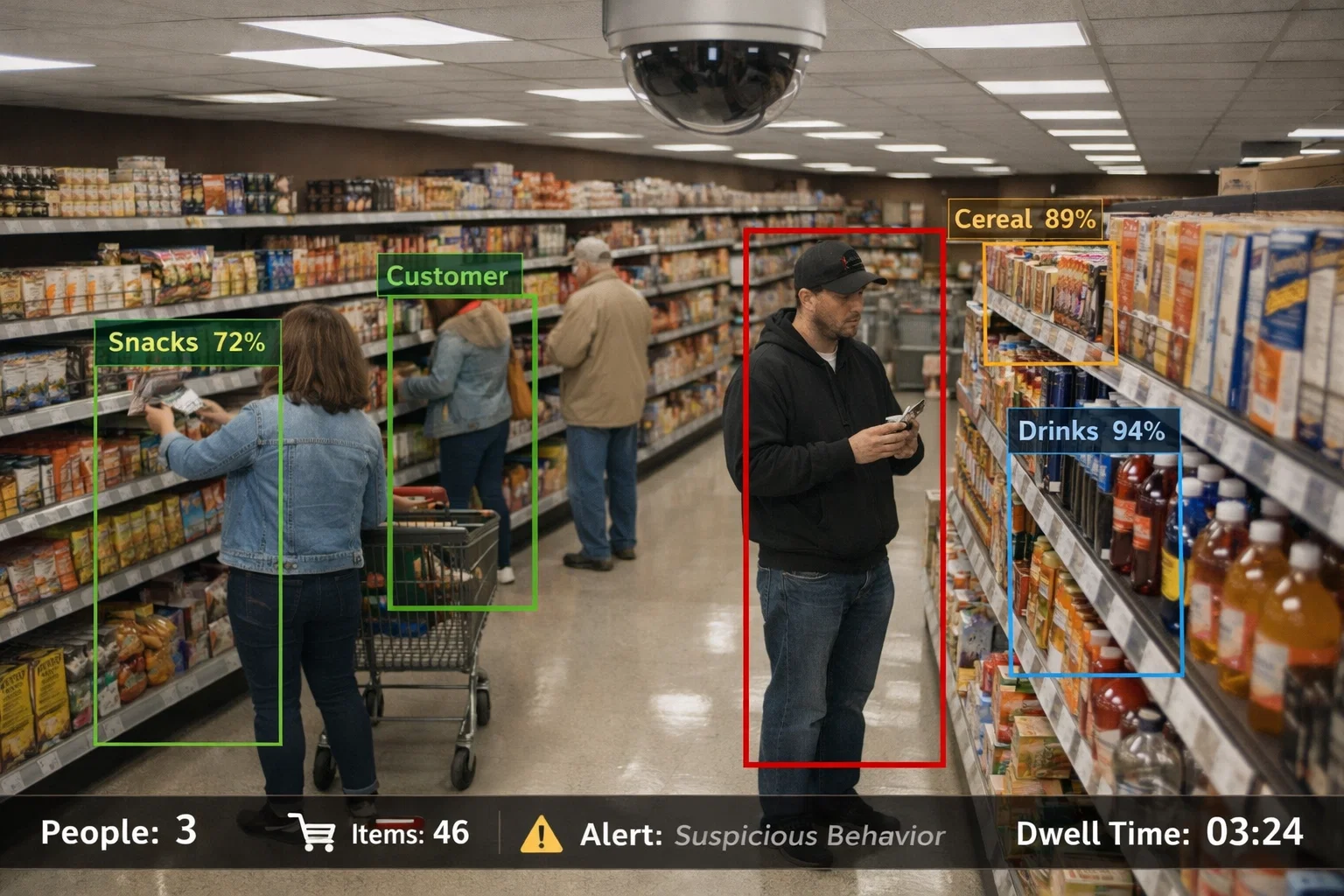
Older surveillance systems rely on motion detection. Any movement — animals, shadows, or lighting change — triggers recording. This produces false alarms and reduces reliability.
AI systems use behavioral analytics.
Instead of detecting motion, the system understands:
- human presence
- direction of movement
- dwell time
- object interaction
For example, a customer browsing normally and a person repeatedly hiding items in clothing appear very different to an AI model. The system identifies intent-based activity, not just movement.
Operational Benefits for Retailers
AI intrusion detection provides measurable operational improvements:
- Early theft detection
- Reduced shrinkage losses
- Automated after-hours security
- Less dependency on manual monitoring
- Faster incident response
- Improved staff safety
The system acts like a 24/7 security analyst rather than a recording device.