


Forest fires have always been one of the most destructive natural hazards. Traditionally, wildfire discovery depended on human observation — watch towers, patrol teams, emergency calls, or satellite updates. In many cases, fires were reported only after smoke became clearly visible or flames had already spread across large areas.
The main problem with this approach was time. A fire that starts as a small ignition can expand into a large-scale disaster within minutes, especially under dry weather and strong wind conditions. Human reporting delays often allowed fires to grow beyond control before firefighting teams even received the information.
Today, artificial intelligence is changing how wildfires are detected. Modern surveillance cameras are no longer passive recording devices. They now analyze the environment in real time and recognize early fire indicators automatically.
AI wildfire detection systems transform cameras into environmental monitoring sensors. Instead of waiting for someone to notice smoke, the system identifies danger immediately and alerts authorities before the fire spreads.
Smoke Recognition & Early Fire Identification
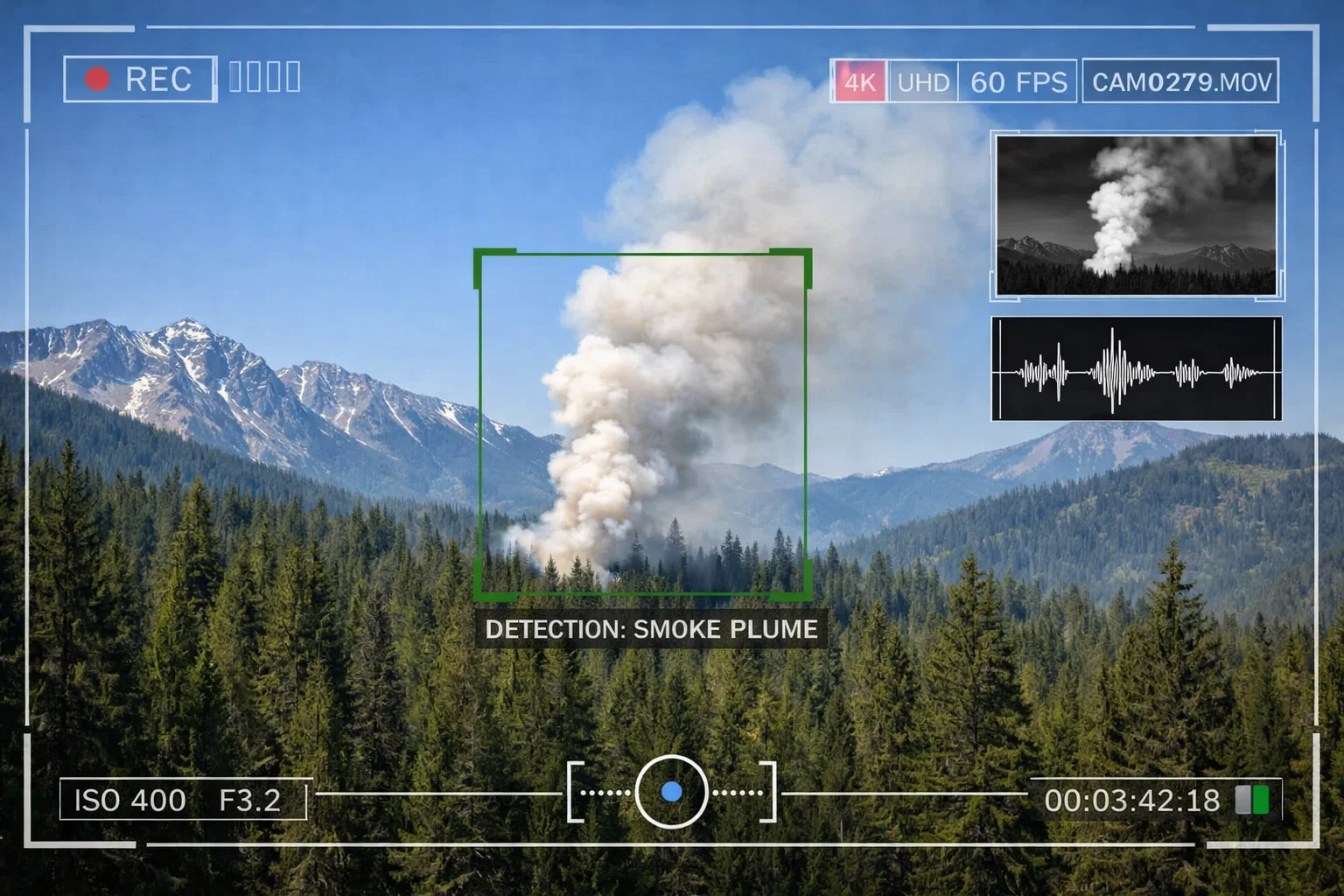
Conventional monitoring systems relied on visible flames or human reporting. However, the earliest stage of a wildfire is usually smoke, not fire. By the time flames become visible, the fire has already grown.
AI-powered cameras continuously analyze visual patterns in the scene using computer vision models. The system recognizes characteristics such as rising smoke plumes, haze formation, color variation, and movement behavior that matches combustion.
Unlike motion-based detection, the AI does not react to clouds, fog, dust, or lighting change. It differentiates environmental conditions from actual fire indicators. As soon as suspicious smoke patterns are confirmed, the system generates an alert.
This allows authorities to respond when the fire is still small and controllable.
Environmental Monitoring & Area Awareness
Wildfire detection cameras are typically installed on towers, mountains, and high elevation points to observe large forest regions. Each camera continuously scans wide landscapes, covering several kilometers.
The AI system evaluates multiple parameters inside the video feed:
- Smoke presence
- Heat shimmer patterns
- Direction of smoke movement
- Growth speed of the smoke column
By analyzing these factors, the system understands whether the activity represents a real fire event or a harmless environmental condition.
Because the system constantly monitors remote areas, detection no longer depends on public reporting. Even uninhabited forests can be supervised 24/7.
Automated Alerts & Emergency Response
Once the system confirms a possible wildfire, it does not wait for manual verification. Alerts are automatically transmitted to control centers and emergency teams.
Authorities receive:
- Exact GPS location
- Camera image snapshot
- Detection time
- Fire confidence level
This information helps firefighters identify where to go immediately instead of searching large regions. Response teams can reach the ignition point faster, which is the most critical factor in preventing fire expansion.
In many cases, fires can be extinguished within minutes after detection.
AI Pattern Analysis & False Alarm Reduction
One of the biggest challenges in outdoor monitoring is false alarms. Traditional sensors often triggered alerts due to fog, vehicle dust, industrial emissions, or weather changes.
AI wildfire detection systems solve this by analyzing behavior over time rather than reacting to a single frame. The software studies how the visual pattern evolves — real smoke rises, expands, and disperses in a specific physical manner.
If the pattern does not match combustion behavior, the alert is ignored. This significantly improves reliability and prevents emergency teams from responding to non-threatening situations.
Edge Processing & Real-Time Monitoring
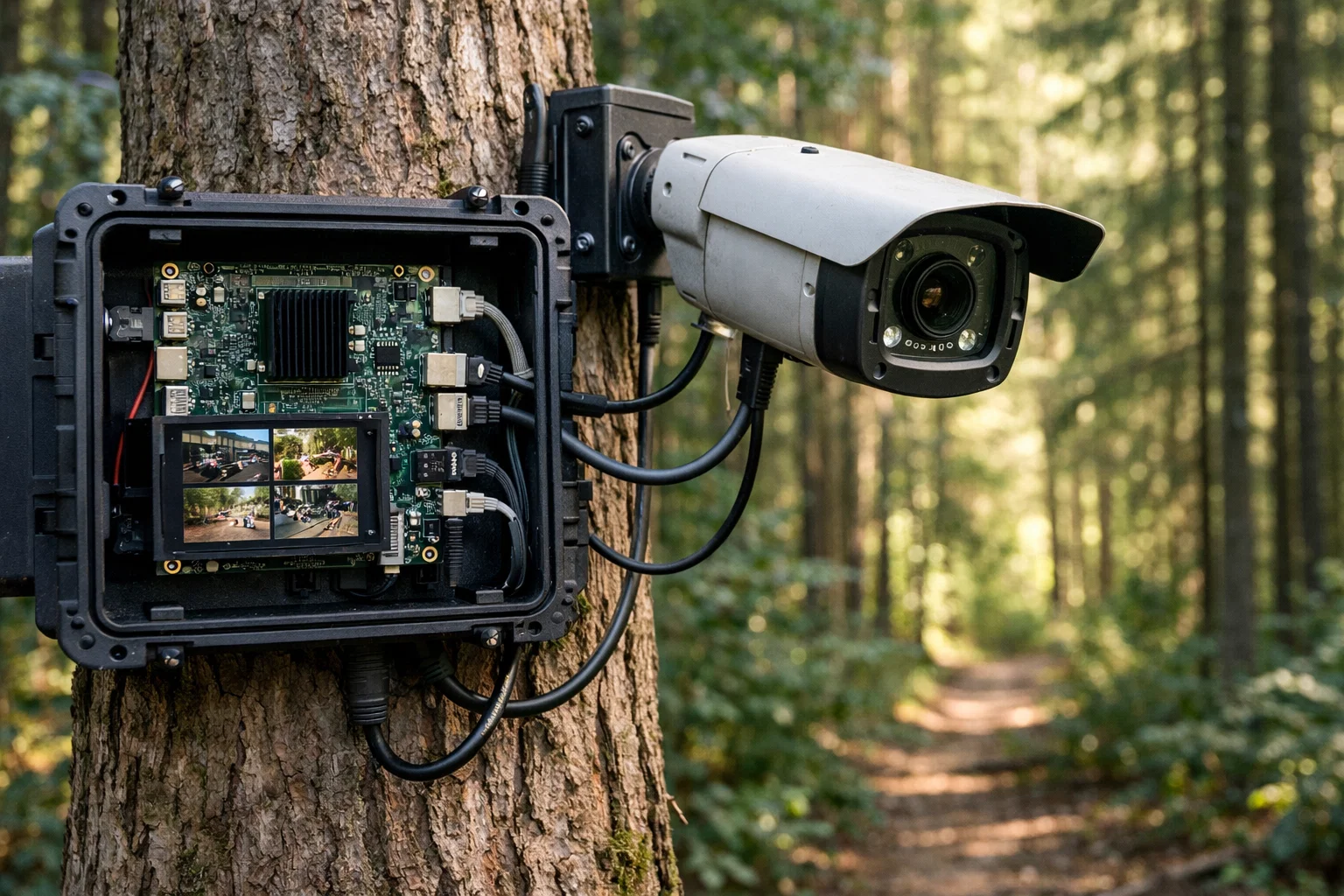
Modern wildfire detection cameras include edge AI processing. Video is analyzed directly inside the camera device or a nearby embedded processor instead of sending continuous footage to a central server.
Only important information — alerts, metadata, and images — is transmitted to monitoring centers. This reduces network bandwidth usage and allows operation in remote forest locations with limited connectivity.
Even if internet connectivity is weak, the system can still detect fire and send critical alerts through available communication channels.
Why AI Wildfire Detection Systems Are Important
- Immediate fire discovery
- Faster firefighting response
- Reduced damage to forests and wildlife
- Lower monitoring manpower
- Continuous 24/7 surveillance
- Reliable operation in remote locations
AI surveillance is shifting wildfire management from reaction to prevention. Instead of fighting large fires, authorities can now stop them at the ignition stage.