


Hospitals are complex environments where patient safety, operational efficiency, and continuous monitoring are essential. Medical staff often manage multiple patients across wards, emergency rooms, waiting areas, and corridors, making it difficult to maintain constant supervision everywhere.
Modern surveillance systems combined with intelligent video analytics help hospitals improve patient safety and operational management. These systems allow staff to monitor patient movement, detect unusual situations, and maintain better control over crowded hospital areas.
Elderly patients often require special attention due to mobility challenges and higher health risks. Monitoring systems can help detect falls, unusual movement, or situations where assistance may be required.
Hospitals also experience high patient flow, especially in waiting areas and registration counters. Intelligent monitoring solutions help manage queues, reduce overcrowding, and improve patient service efficiency.
By implementing advanced monitoring technologies, hospitals can enhance patient care, improve operational efficiency, and ensure a safer environment for patients, visitors, and healthcare professionals.
Elder Patient Safety Monitoring

Elderly patients are more vulnerable to falls and medical emergencies, especially in hospital wards or recovery areas. Continuous monitoring systems help staff observe patient activity without disturbing their rest.
AI-powered surveillance can detect unusual movement patterns such as a patient attempting to stand without assistance or falling from a bed. When such incidents occur, alerts can immediately notify nurses or medical staff.
This proactive monitoring helps hospitals respond quickly and reduce the risk of serious injuries among elderly patients.
Patient Monitoring in Wards
Hospital wards often contain multiple patients receiving treatment simultaneously. Continuous visual monitoring allows healthcare providers to observe patient behavior and ensure that medical care protocols are followed.
Surveillance systems help staff identify patients requiring immediate attention, monitor movement around beds, and ensure that patients remain safe within the treatment area.
These systems also support medical teams in managing patient care more efficiently across large hospital facilities.
Queue Management in Waiting Areas
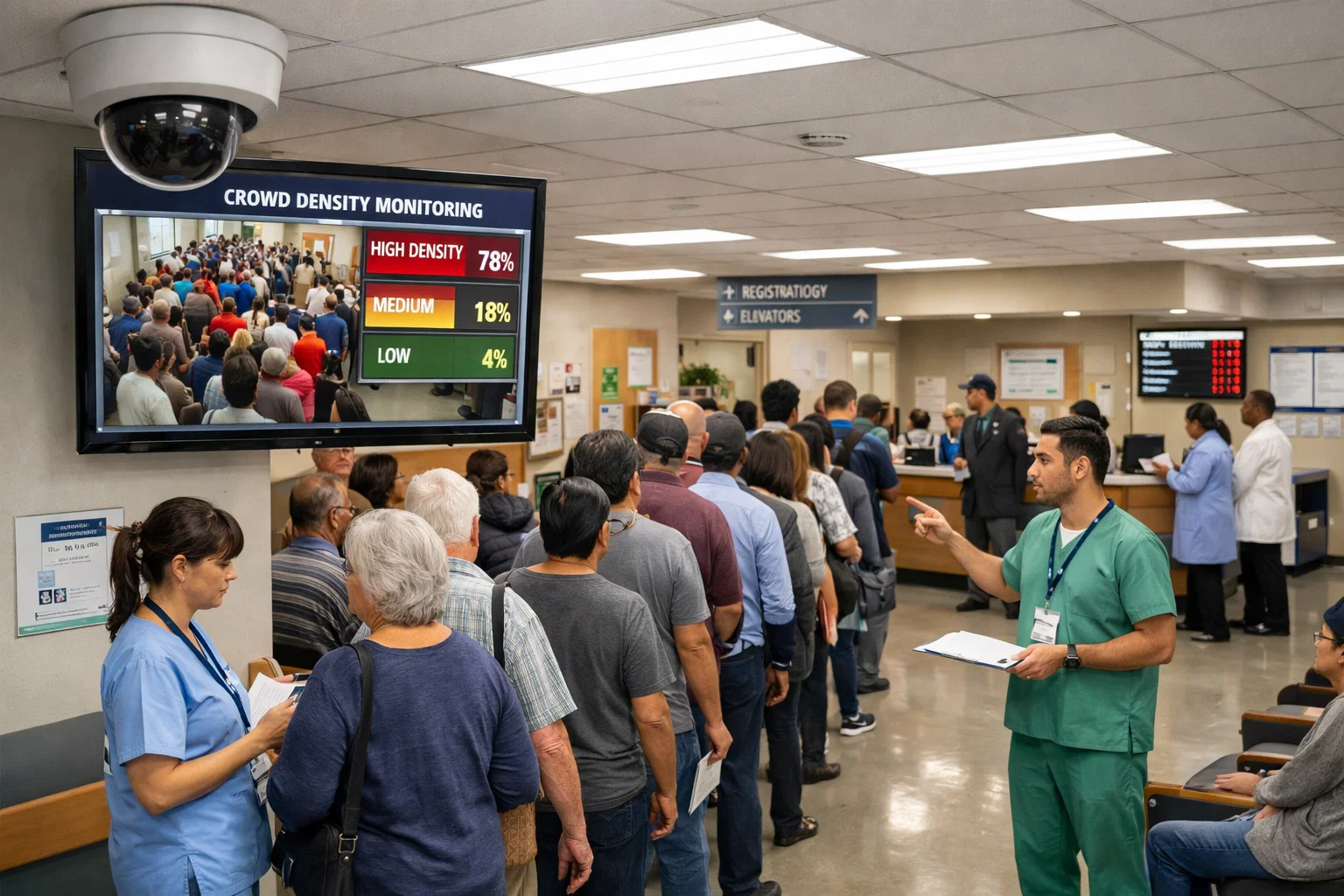
Hospital waiting areas often become crowded, especially in outpatient departments or emergency sections. Long queues can create confusion and discomfort for patients and visitors.
Intelligent monitoring systems can track crowd density and queue length, helping hospital staff manage patient flow more effectively. Alerts can be generated when waiting areas become overcrowded.
This allows administrators to allocate additional staff or open new service counters to reduce waiting times.
Restricted Area Monitoring
Hospitals contain several restricted areas such as operation theatres, laboratories, medicine storage rooms, and administrative offices. Unauthorized access to these areas can create safety and security concerns.
Smart surveillance systems help monitor entry points and detect unauthorized movement in restricted zones. When such activity is detected, security personnel can respond quickly.
This monitoring helps protect medical equipment, sensitive patient data, and critical hospital infrastructure.
Incident Monitoring & Emergency Response
Hospitals must be prepared to respond quickly to emergencies such as patient collapse, disputes in waiting areas, or unexpected incidents in corridors.
Intelligent surveillance systems can help staff identify these situations quickly and provide visual information to support immediate action.
Recorded footage also assists hospital administrators in reviewing incidents and improving safety procedures.
Why Hospitals Prefer Intelligent Monitoring Systems
• Improved safety monitoring for elderly patients and high-risk individuals
• Continuous patient supervision across wards, corridors, and treatment areas
• Efficient queue management in busy hospital waiting areas
• Protection of restricted medical zones and sensitive hospital infrastructure
• Faster detection of incidents and quicker response from medical staff
• Better operational efficiency and improved patient care services