


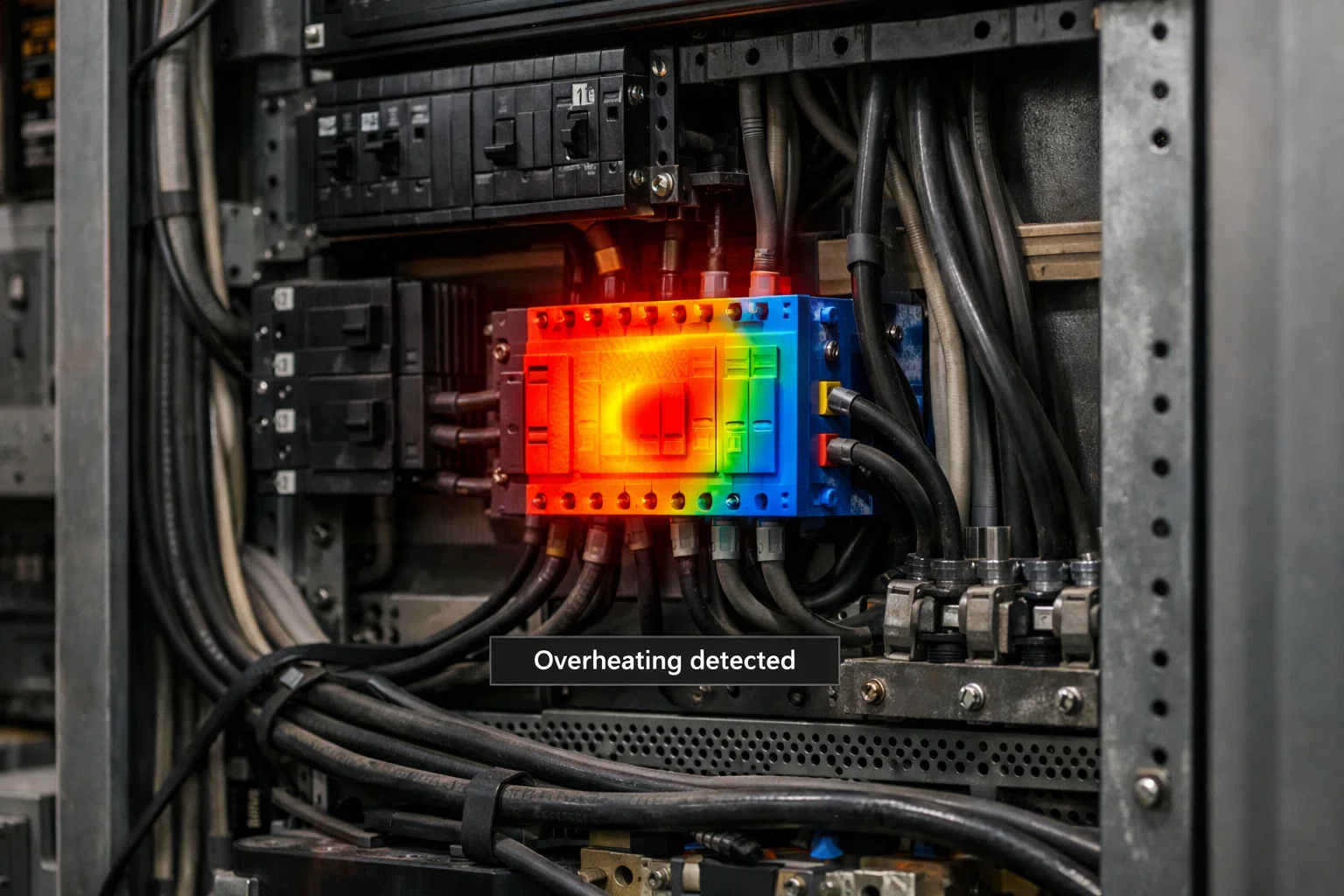
Artificial Intelligence cameras perform complex operations such as object detection, behavior analysis, and real-time tracking. Unlike traditional CCTV cameras, AI cameras continuously run neural networks and high-performance processors. This significantly increases power consumption and heat generation inside the device.
Managing temperature and stable power delivery becomes one of the biggest engineering challenges while designing reliable AI surveillance systems.
Heat Generation in AI Processing
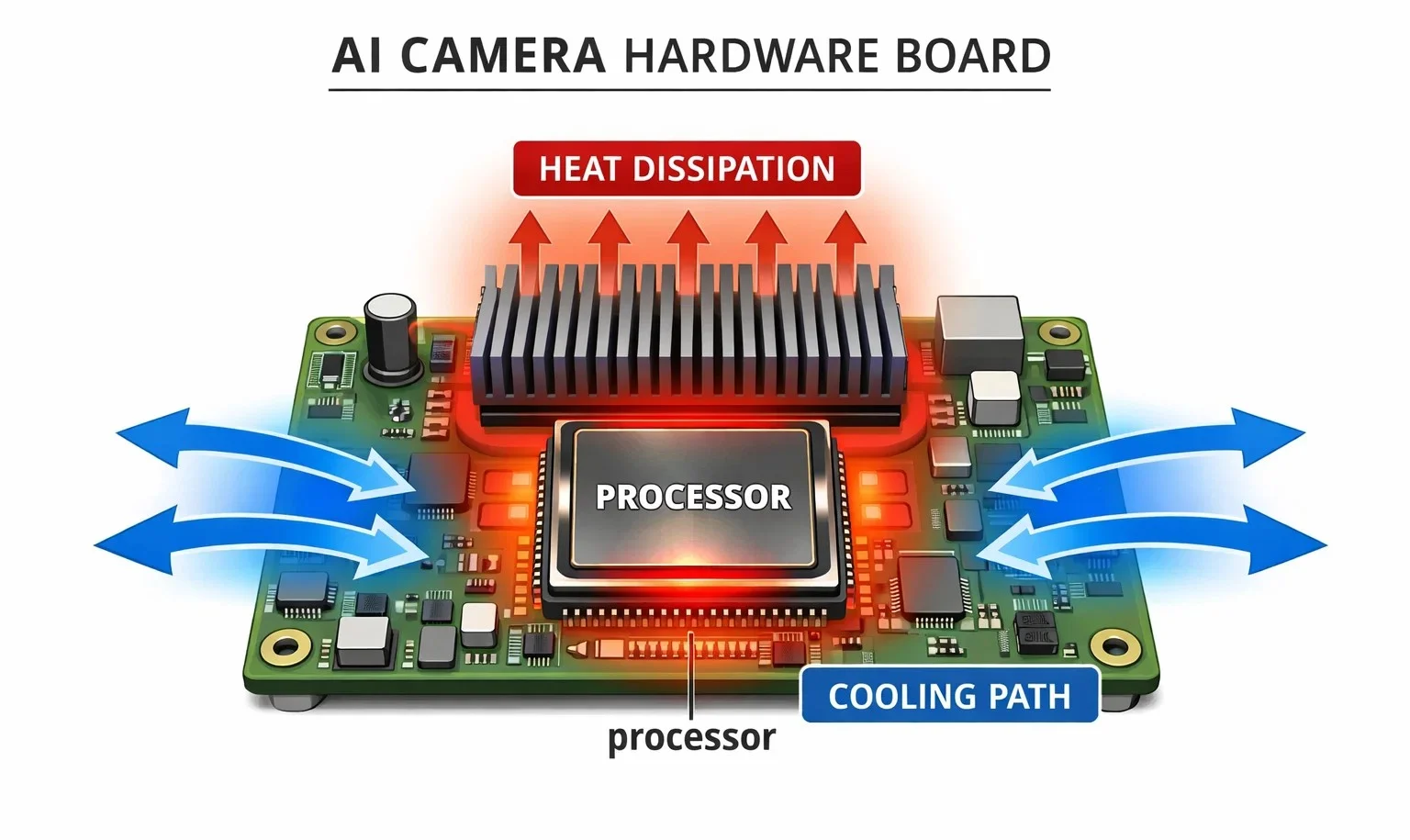
AI cameras contain specialized chipsets such as GPUs, NPUs, or AI accelerators. These processors analyze video frames continuously, which generates heat over long operating hours. In outdoor or industrial environments, ambient temperature can already be high, making cooling even more difficult.
If heat is not controlled properly, performance drops, detection accuracy decreases, and hardware lifespan reduces. In extreme cases, the camera may automatically shut down to protect internal components.
Thermal Design & Cooling Solutions
To solve overheating issues, AI cameras require efficient thermal design. Manufacturers use aluminum heat sinks, thermal pads, and optimized airflow structures to dissipate heat. Some advanced systems use metal housings that act as passive cooling bodies.
Proper heat management ensures that the camera operates continuously even in high-temperature environments such as factories, parking areas, highways, and outdoor installations exposed to sunlight.
Power Stability Challenges
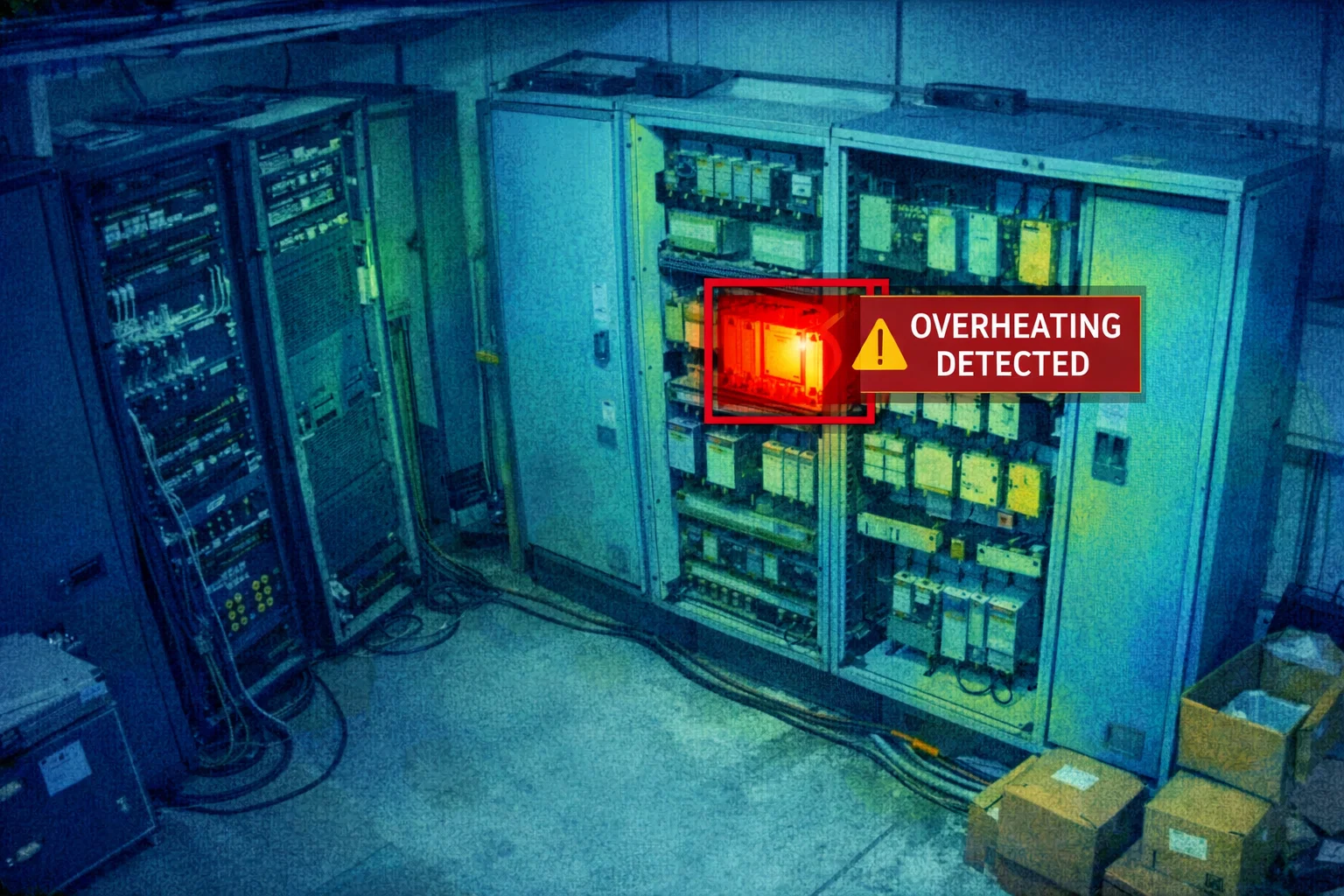
AI cameras also require stable power supply because real-time processing demands consistent voltage. Power fluctuations, especially in industrial or outdoor installations, can cause device resets or corrupted recordings.
Engineers integrate surge protection, voltage regulators, and power filtering circuits to maintain stable operation. PoE (Power over Ethernet) technology is commonly used to provide both data connectivity and controlled power delivery through a single cable.
Reliability in Continuous Operation
Unlike consumer devices, surveillance cameras operate 24/7. Continuous processing, recording, and detection place heavy load on hardware components. Designing cameras that remain stable over long durations requires careful balancing of performance and energy efficiency.
Efficient thermal management and power stability directly determine how reliable the AI camera system will be in real-world deployments.
Key Benefits of Proper Engineering
- Longer hardware lifespan
- Stable real-time detection
- Reduced system failures
- Continuous monitoring capability
- Reliable 24/7 security operation