


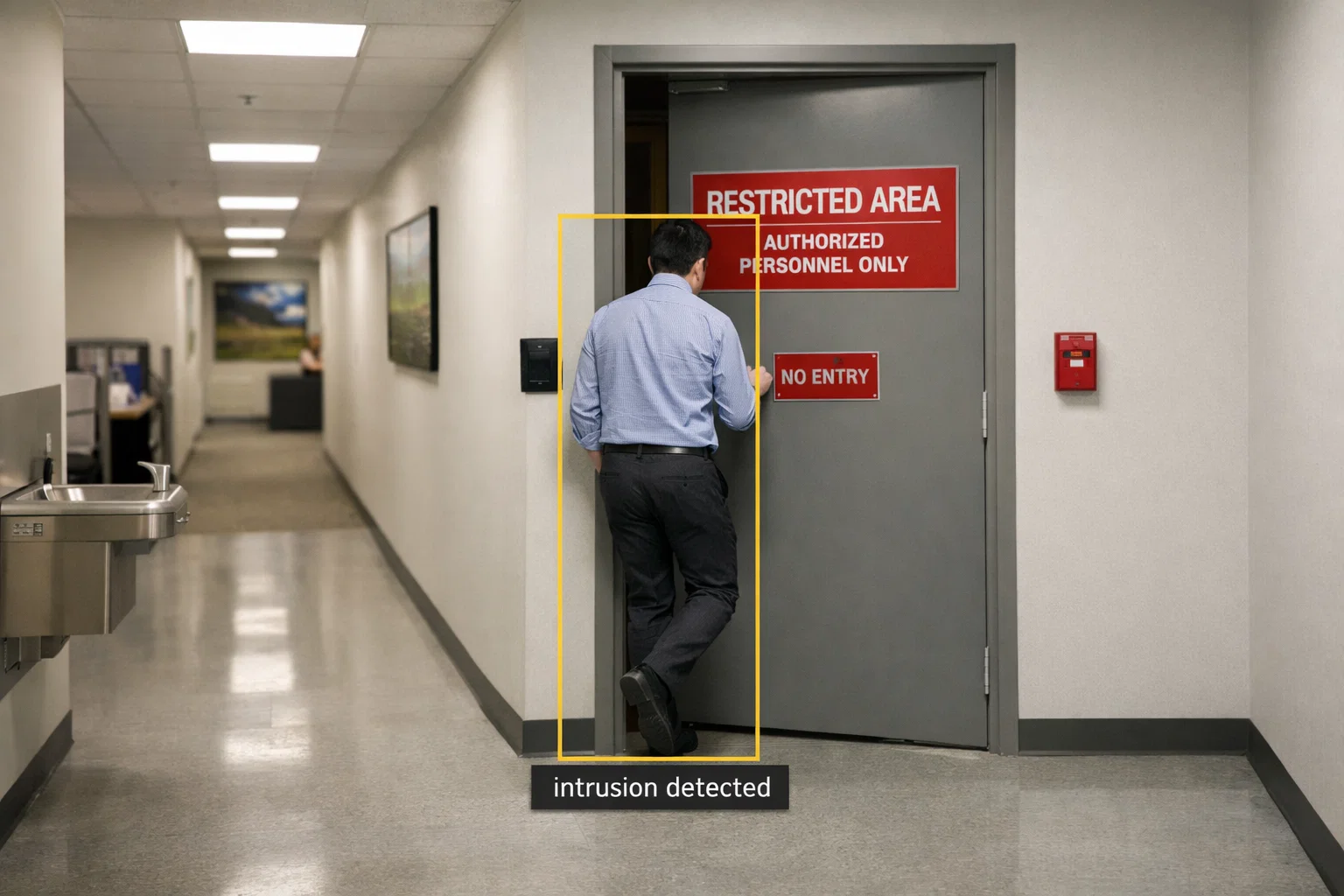
Modern surveillance systems are rapidly evolving from simple video recording devices to intelligent decision-making systems. Traditionally, camera footage was transmitted to centralized servers or cloud platforms where analytics processing occurred. While this method provides scalability, it introduces latency, bandwidth dependency, and privacy concerns.
Edge AI cameras change this architecture by performing analytics directly inside the camera hardware. Instead of sending every video frame to the cloud, the device processes the video locally and only sends alerts or metadata when an event occurs. This creates a major engineering tradeoff between Edge AI and Cloud AI systems.
Processing Latency & Real-Time Response
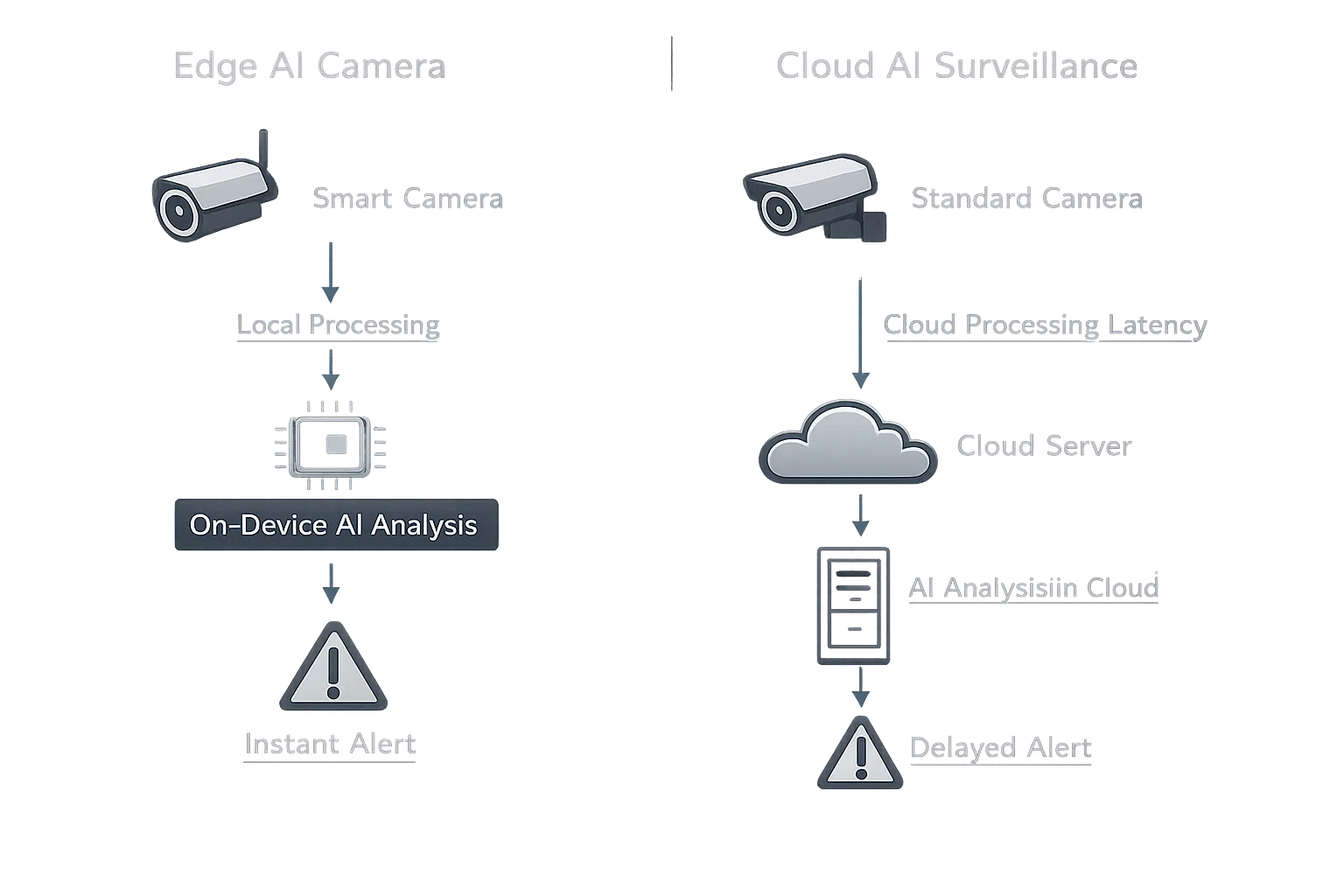
One of the most important differences between Edge AI and Cloud AI is response time. Cloud systems require video data to travel across networks to a remote server, be processed, and then return a result. This delay may range from a few seconds to even minutes depending on internet conditions.
Edge AI cameras process the video internally using onboard processors and neural accelerators. The system can detect events such as intrusion, loitering, or suspicious behavior instantly. This immediate response is critical in security-sensitive environments like factories, campuses, and public areas where reaction time directly affects safety.
Bandwidth & Network Dependency
Cloud-based surveillance constantly uploads high-resolution video streams to servers. A single camera can consume large bandwidth, and when multiple cameras are installed, network infrastructure costs increase significantly. Network outages can also temporarily disable analytics functions.
Edge AI systems drastically reduce bandwidth usage because video processing happens locally. Only alerts, snapshots, or event metadata are transmitted. Even if the internet connection fails, the camera continues detecting events and recording locally, ensuring uninterrupted security monitoring.
Privacy & Data Security
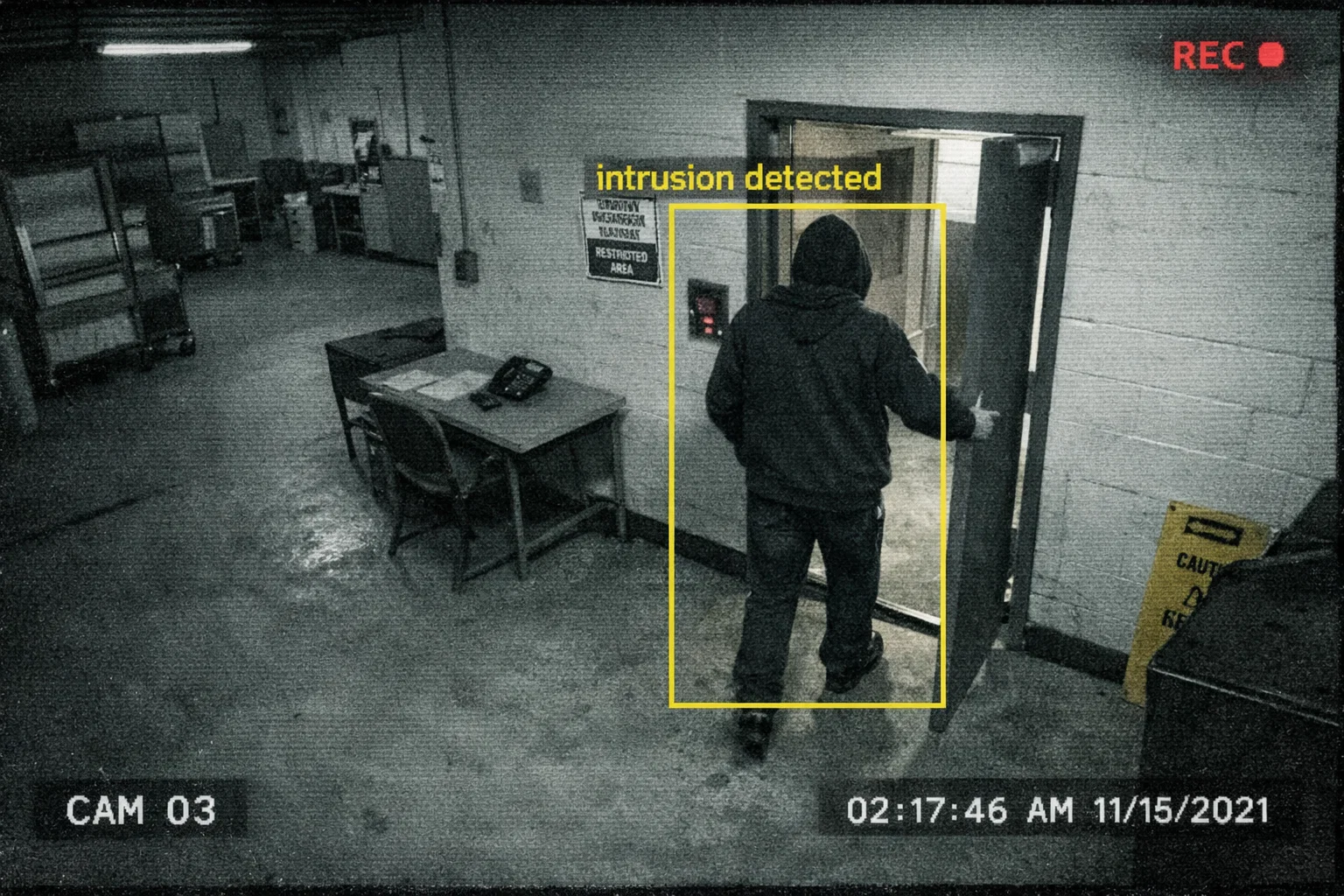
Privacy regulations and data protection are becoming increasingly important. In cloud-based systems, video footage leaves the premises and is stored on remote servers. This can create concerns regarding unauthorized access, data leaks, or regulatory compliance.
Edge AI cameras improve privacy by keeping video data inside the site network. Only relevant information is shared instead of the full video stream. This makes Edge AI especially suitable for sensitive locations such as offices, hospitals, research labs, and financial institutions.
System Scalability & Maintenance
Cloud AI offers easier scalability since additional processing resources can be added remotely. However, it often requires subscription costs, server management, and continuous internet reliability.
Edge AI systems scale differently — each camera acts as an independent intelligent device. Adding new cameras automatically increases processing capability without additional server load. Maintenance becomes simpler and infrastructure requirements remain minimal.
Why Many Industries Prefer Edge AI
- Instant event detection
- Lower bandwidth consumption
- Better privacy protection
- No dependency on continuous internet
- Reduced operational cost