


Modern surveillance systems were originally designed to capture and store video recordings for later investigation. Cameras continuously recorded footage while security teams manually observed multiple screens or reviewed incidents after they occurred. Although useful for evidence collection, this approach depended heavily on human attention and reaction time.
With the advancement of artificial intelligence, video surveillance is no longer limited to recording activities. Cameras can now analyze visual data automatically and interpret what is happening inside the scene. Instead of waiting for a person to monitor video, the system itself identifies risks and generates alerts.
AI-powered surveillance changes the role of a camera. The device becomes an intelligent sensor capable of recognizing objects, detecting suspicious behavior, and assisting security teams in real-time decision making.
Scene Understanding & Object Classification

Traditional surveillance systems relied on motion detection. Any movement — such as shadows, rain, or lighting variation — triggered recording and alerts. This produced frequent false alarms and reduced monitoring efficiency.
AI surveillance analyzes each frame using computer vision algorithms. The system identifies objects such as people, vehicles, and carried items within the camera view. By understanding the scene, the camera reacts only to meaningful activity. A human entering a restricted zone generates an alert, while environmental motion is ignored. This significantly improves detection accuracy and reliability.
Automated Event Recognition
Modern surveillance platforms continuously monitor live video and evaluate predefined security conditions. The system can automatically detect events such as intrusion, perimeter crossing, or unauthorized access.
Instead of watching video walls constantly, operators receive notifications only when an important event occurs. For example, if someone enters a closed building at night, the system immediately triggers an alert. This reduces human workload and allows faster security response.
Behavioral Pattern Analysis
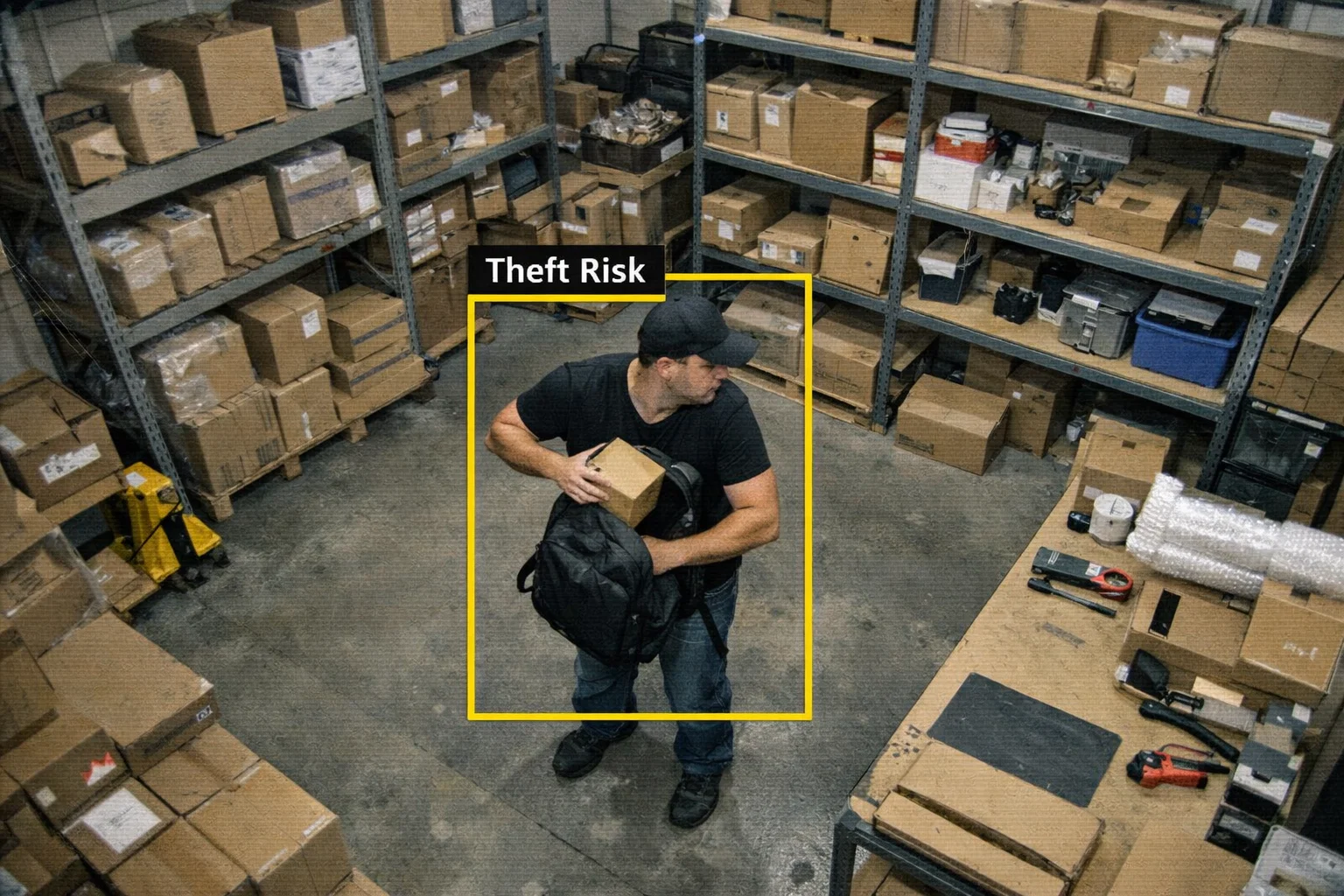
AI surveillance does more than detect presence. It analyzes how individuals behave over time. The system tracks movement direction, dwell time, and repeated activity within specific areas.
Unusual patterns — such as loitering near entrances, repeated attempts to access a door, or abnormal movement paths — can indicate risk. By identifying behavioral anomalies, the system predicts potential incidents before they escalate. This shifts surveillance from reactive monitoring to preventive security.
Identity Recognition & Access Awareness
Advanced video analytics enables recognition of faces and vehicle license plates. This allows surveillance to integrate with access control systems and facility management.
Authorized personnel can be verified automatically, while unknown individuals generate alerts. Entry logs can be maintained without manual verification. In environments such as offices, campuses, and warehouses, this improves both operational tracking and security control.
Edge Intelligence & Real-Time Alerting
Recent surveillance architectures embed AI processing directly into cameras or nearby edge devices. Video data is analyzed locally instead of being transmitted continuously to a remote server.
Only alerts, snapshots, or metadata are sent to monitoring systems. This reduces network load and allows operation even during connectivity issues. Immediate notifications can be delivered to control rooms or mobile devices, enabling rapid response to incidents.
Why AI Surveillance is Being Widely Adopted
- Real-time incident detection
- Reduced false alarms
- Continuous automated monitoring
- Faster security response
- Improved operational awareness